



Skip to work
Ryan Kang
Loading profileHealth · AI · Growth

FounderProduct BuilderGTM Engineer

Ryan Kang.

I build products, systems, and companies at the intersection of health, AI, and growth.

  • Northwestern University
  • Founder of Cado
  • Consumer health · Product · AI · Growth
Organic views in 3 monthsSlidez
12.5M+
Customer interviewsSlidez · Cado
225+
Sales infrastructure costBeam
−90%
Download-to-paid conversionCado
6.8%
Recipes health-gradedCado
10k+

Selected work

Five builds. Same loop.

Consumer health, AI products, growth systems, and physical goods. Each one started with a problem and a conversation with users, and ended with something shipped and measured.
01Cado·Consumer Health · Scoring Methodology
Cado logo

Turning nutrition into a grade you can trust

Cado gives every recipe a letter grade per serving, plus goal lenses like Heart Health, Blood Sugar, and Less Processed. Each grade is built from separate factors, each judged on its own criteria. The grade was the easy part. The work was making it honest, hard to game, and able to explain itself.

Problem
Nutrition data is dense, and most food scores are easy to game: stack enough protein and the sugar disappears.
Build
A layered engine that measures each recipe, judges it against published guidelines, and explains the result down to the ingredient.
Principle
Measure once, judge per goal. Scales follow published guidelines wherever they exist, and when the data isn't good enough, there's no grade.
11
Scores per recipe
10k+
Recipes graded
Fig. 01 / Measure → judge → explain

Inputs

  • Composition

    Per servingNutrientsIngredients
  • Guidelines

    WHODASH
  • Data quality

    Coverage check

Cado score

Salmon grain bowl

per serving
BGood
  • Free sugarGreat
  • NutrientsGood
  • SodiumWatchModerate
  • Data coverage Enough to grade

Action

Suggested swap

Soy sauce → low-sodium soy sauce

Sodium: Moderate → Good

Ranks in

Your Heart Health feed

Illustrative

In the app

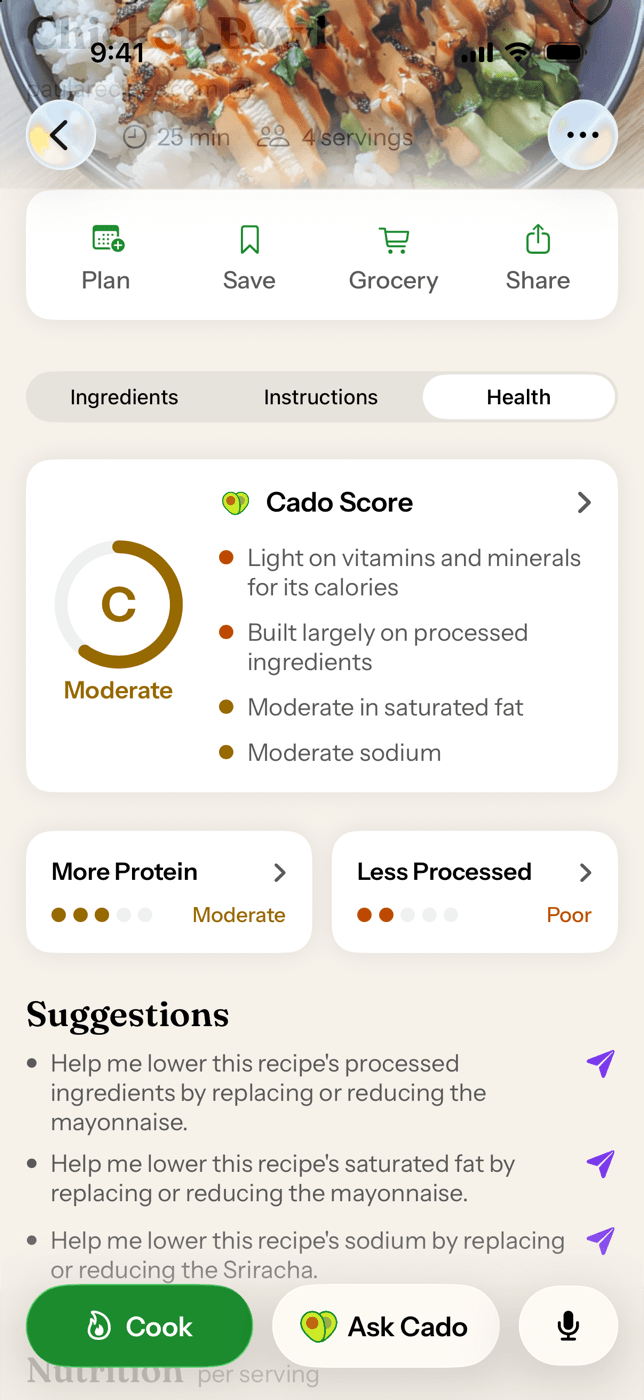
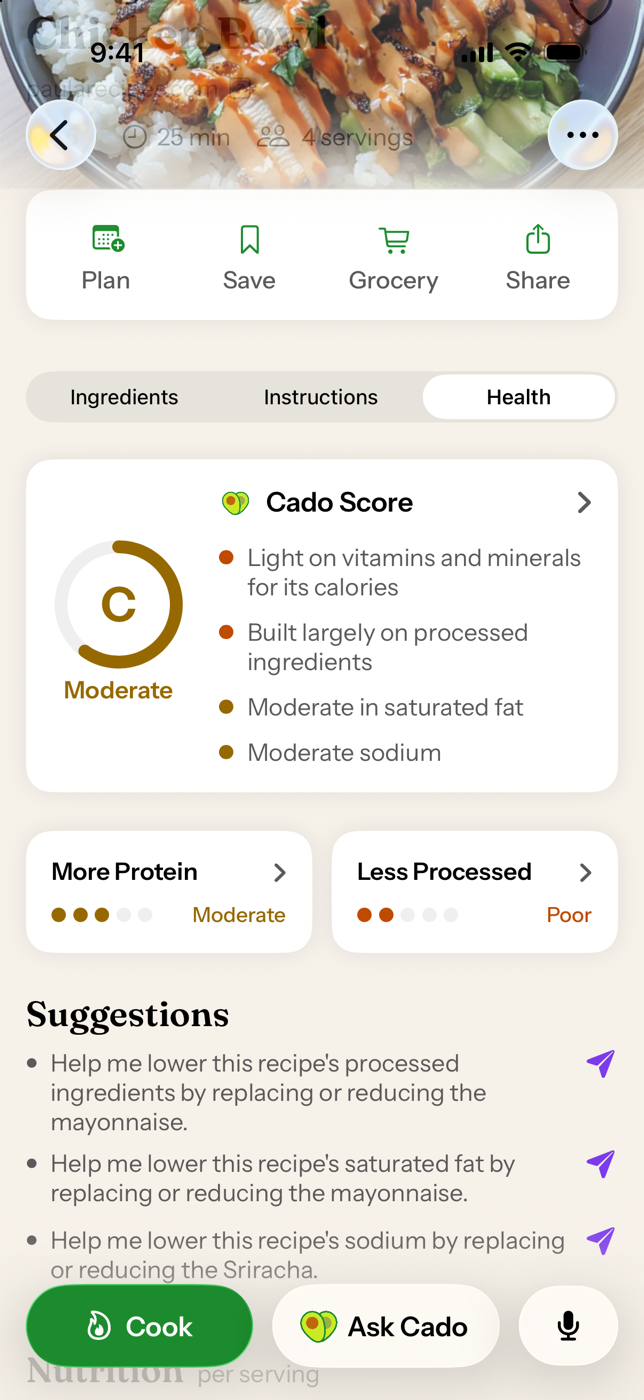
  1. Cado recipe Health tab: a C Moderate score with reasons, goal lenses, and ingredient swap suggestions

    01Grade + reasons

    Next to the grade, the reasons behind it, plus swaps that call out the ingredient driving each factor.
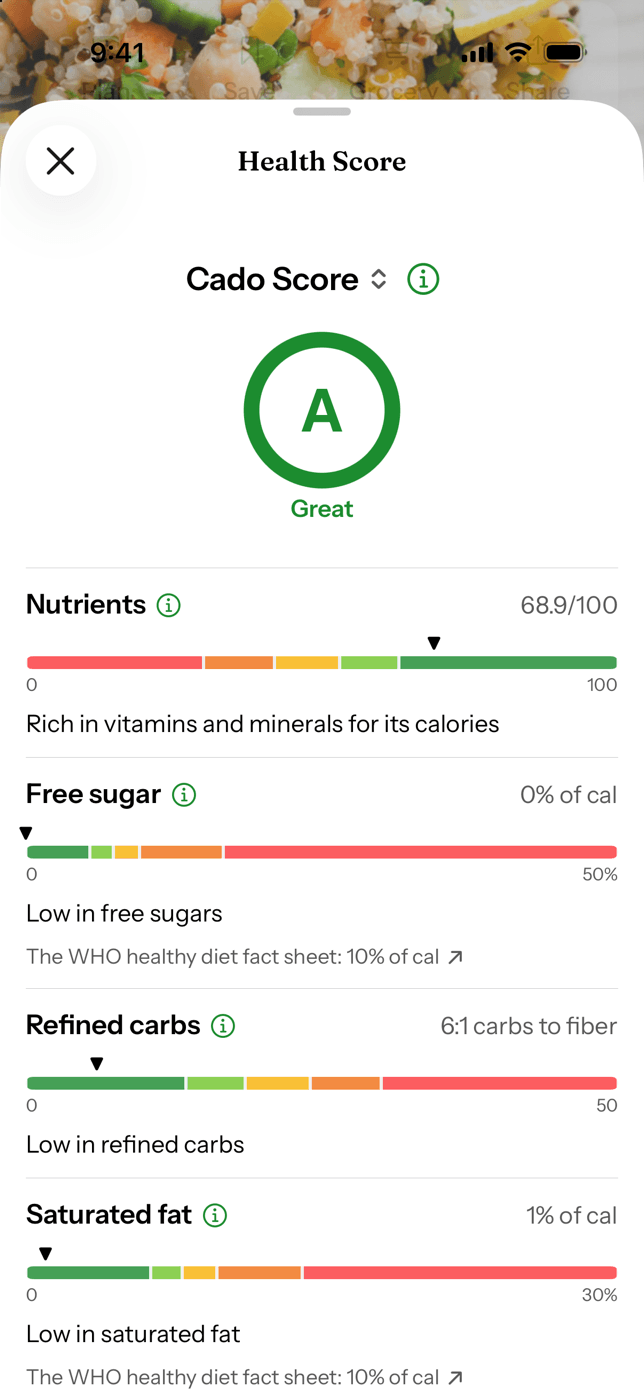
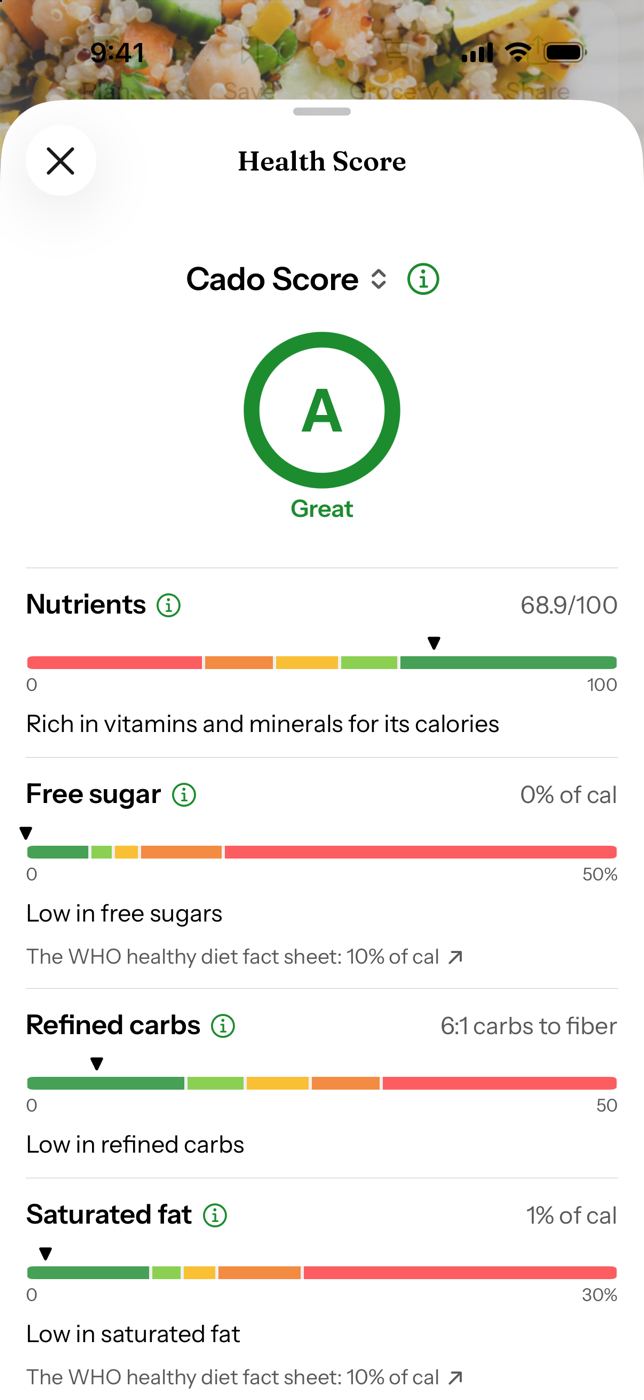
  2. Cado score breakdown with each factor on a zoned bar and its guideline source

    02Factor breakdown

    Each factor sits on its own scale, citing the guideline it comes from (WHO, DASH, FDA) where one exists.
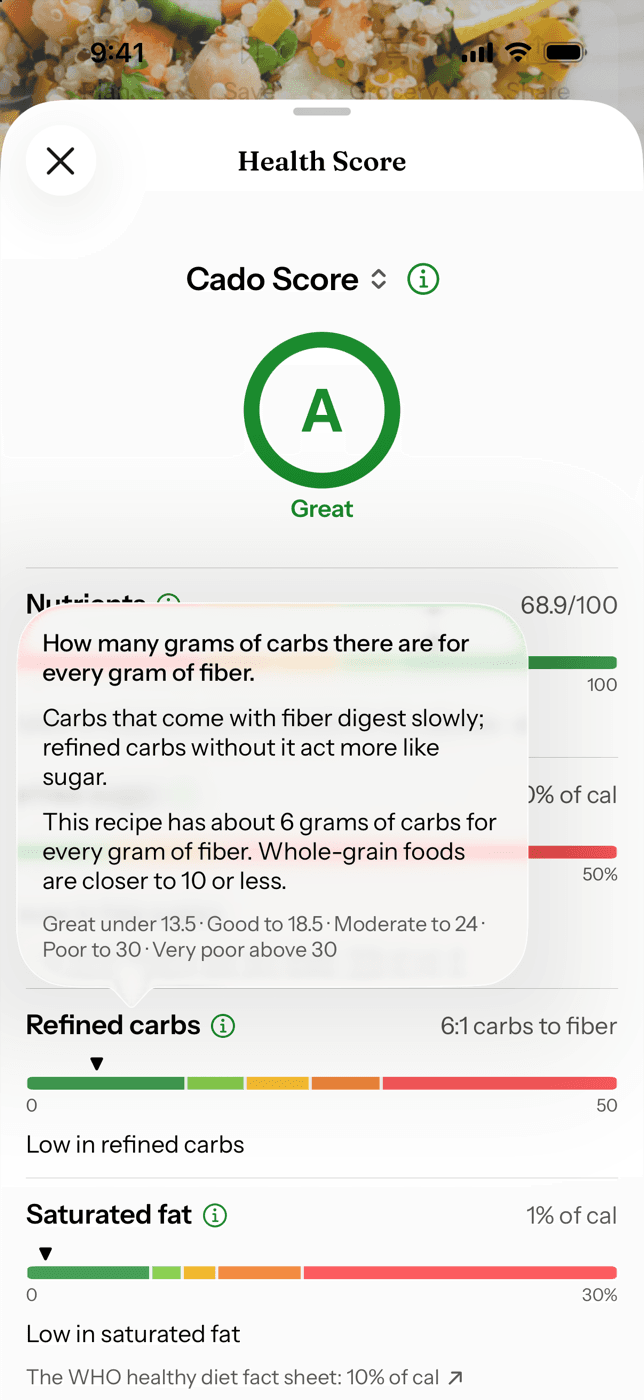
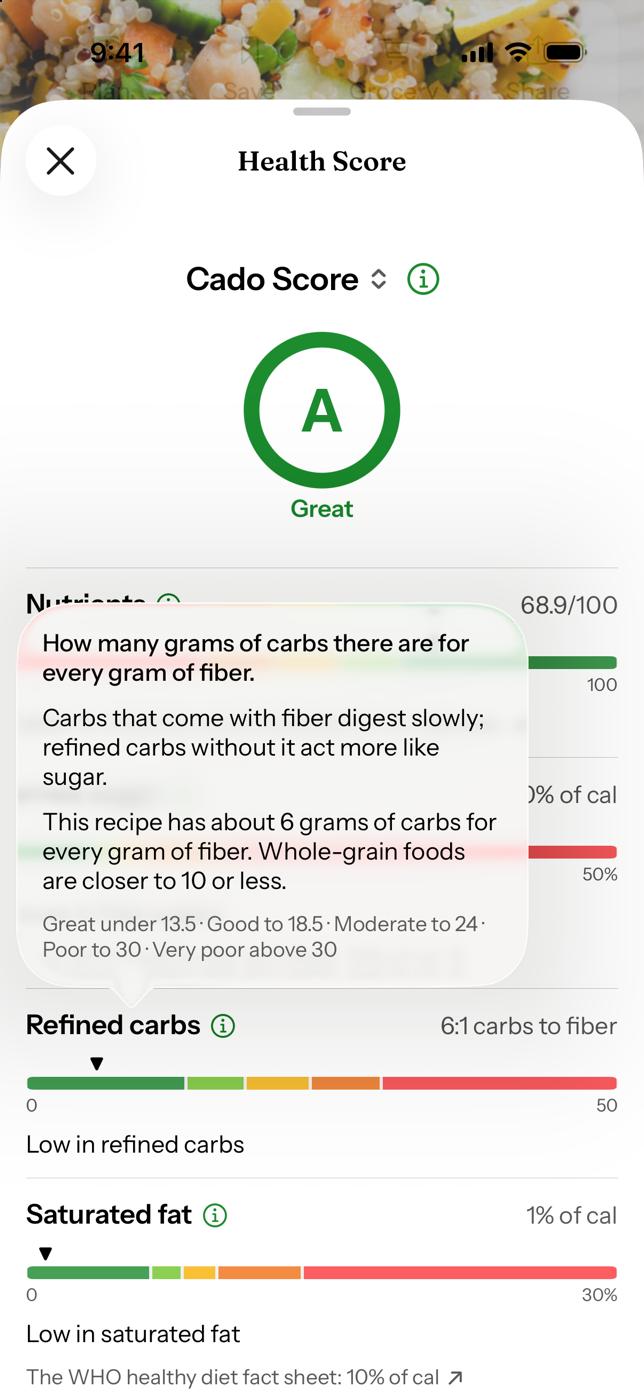
  3. Tooltip explaining the carbs-to-fiber factor and its grade cutoffs

    03How it's measured

    Every factor explains itself in plain language, cutoffs included.
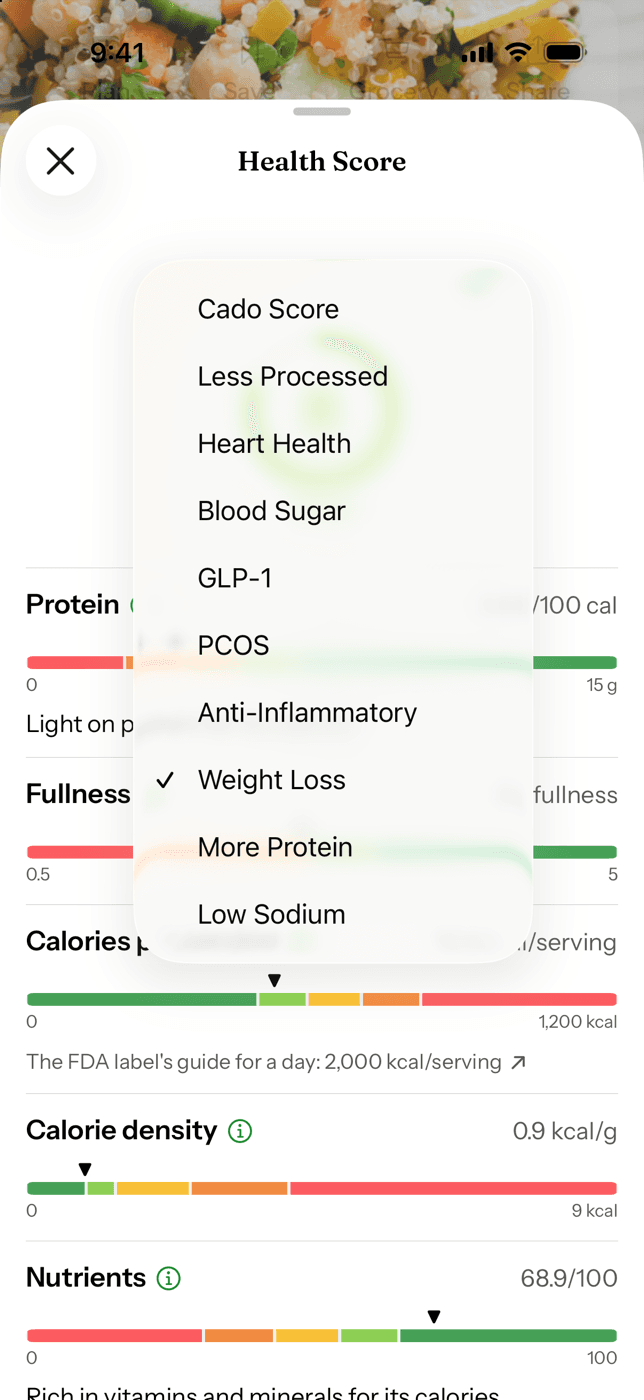
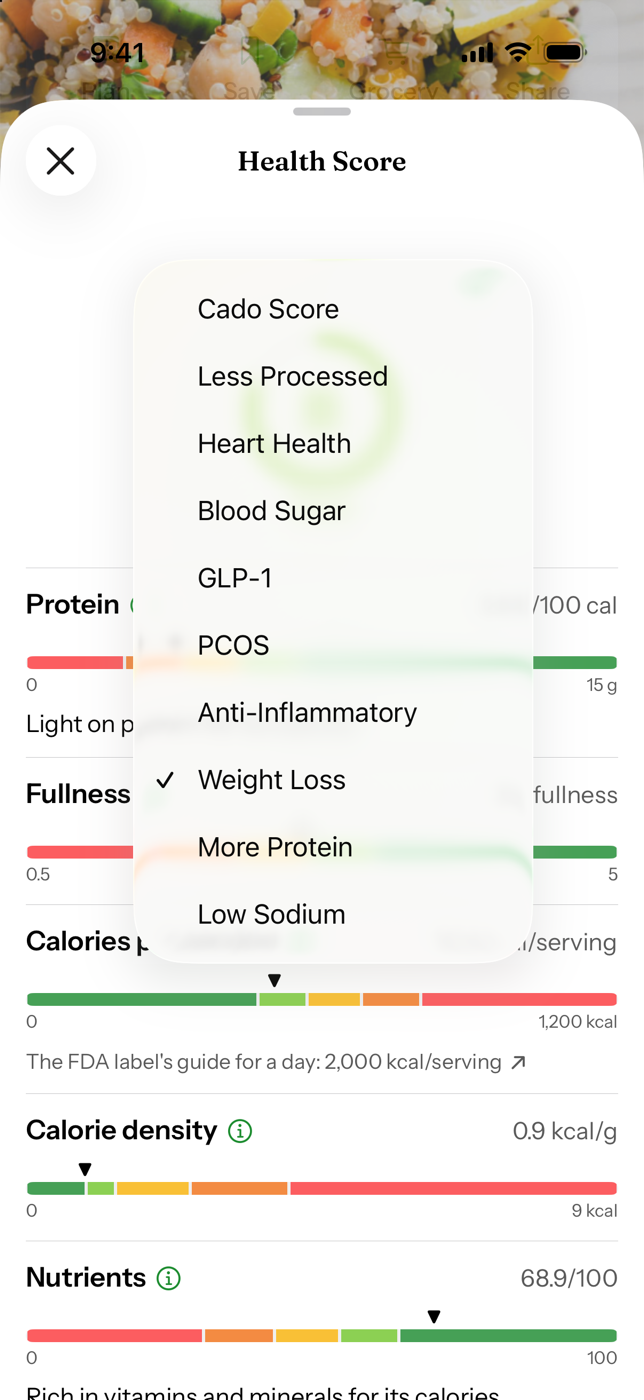
  4. Picker listing Cado's health goal lenses, with Weight Loss selected

    04Goal lenses

    Same facts, different lens: pick the goal that matters to you.
Measure, then judge

  • Ingredients are resolved to a food database, and nutrition is computed per serving
  • Measurement happens once. Each score then applies its own judgment to the same facts
  • Data comes from multiple sources, each tracked with where it came from and how confident it is

Hard to game

  • The overall score balances nutrient density against saturated fat, added sugar, sodium, and processing
  • Factors are combined so that one weak spot can't be hidden by strengths elsewhere
  • Sugar is judged by where it comes from, so fruit isn't treated like syrup

Grounded in guidelines

  • Where a published guideline exists (WHO, DASH, FDA), a factor's scale is anchored on it and cited in the app
  • Hard caps only apply where a guideline supports them, and they should fire rarely
  • Grade cutoffs were calibrated so the labels match what the guidelines would say

Refuse rather than guess

  • If too little of a recipe is backed by real nutrition data, it shows the facts but no grade
  • A missing score never ranks
  • Every grade comes with its reasons, never just a letter

Explaining the why

  • Each factor shows where the recipe lands and the guideline behind it
  • The ingredients driving a weak factor are named, along with what changes without them
  • One tap hands those ingredients to the assistant to swap or reduce

Goals without personalizing the score

  • The score is the same for everyone, so it stays comparable and checkable
  • Personalization is choosing the lens: your health goals decide what the feed ranks first
  • Copy is written about nutrients, never framed around a medical condition

Validation

  • Grades are checked to spread across every level instead of piling up in the middle
  • Score rankings are compared against dietitian-style judgments and hand-sorted examples
  • Next: clinical review of the medically named lenses
02Cado·AI-Native Product · Voice
Cado logo

A cooking companion you talk to with your hands full

Cook mode is a live voice conversation that knows the recipe, the step you're on, and the diets and allergies in your profile. Mid-recipe, it calls tools hands-free: starting timers, pulling up nutrition, and proposing recipe edits while you cook.

Problem
Mid-recipe, your hands are messy and your attention is split. Scrolling or typing into a chatbot breaks the flow.
Build
A real-time voice system we built ourselves, with hands-free tool calling: the same app actions as chat, triggered by your voice.
Principle
Reduce cognitive load. Short, spoken, about the step you're on, and never a guess on food safety.
Fig. 02 / Recipe state + voice + tool calls

Recipe state

4 / 6

Pan-seared salmon

  1. Pat salmon dry, season
  2. Make the herb dressing
  3. Heat pan, oil until shimmering
  4. 4Sear skin-side down2:41
  5. 5Flip, baste, rest
  6. 6Plate with dressing

Cook mode · voice

Listening
  • User: How do I know when it's ready to flip?

  • context · viewing step 4
  • Cado: Watch the side. When it's opaque about two-thirds up, flip. I'll set a timer for 3 minutes.

  • tool call · set_timer("Sear", 3:00)
  • User: I don't have lemon for the end.

  • Cado: A splash of the vinegar from your dressing works. I've proposed the swap for step 6.

  • tool call · edit_this_recipe → proposal
Illustrative

In the app

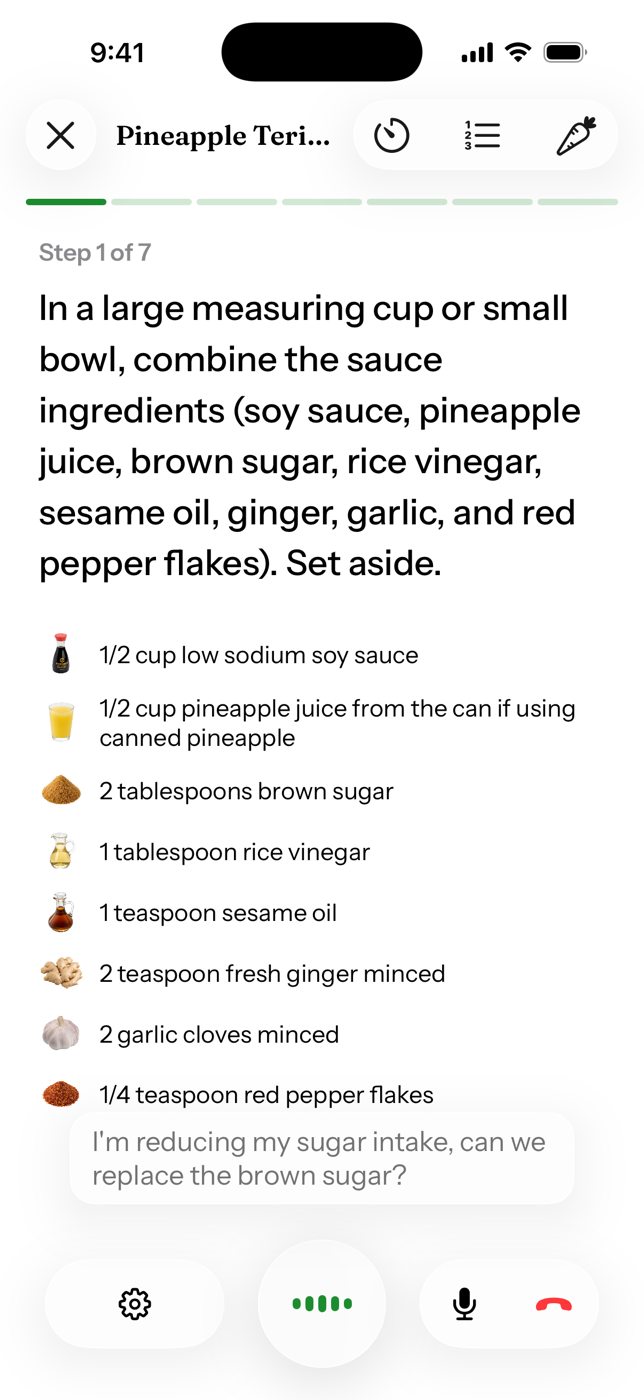
  1. Cado cook mode: the user asks by voice to replace the brown sugar because they're cutting sugar

    01Editing the recipe

    Hands busy, step 1 of 7: "I'm reducing my sugar intake, can we replace the brown sugar?"

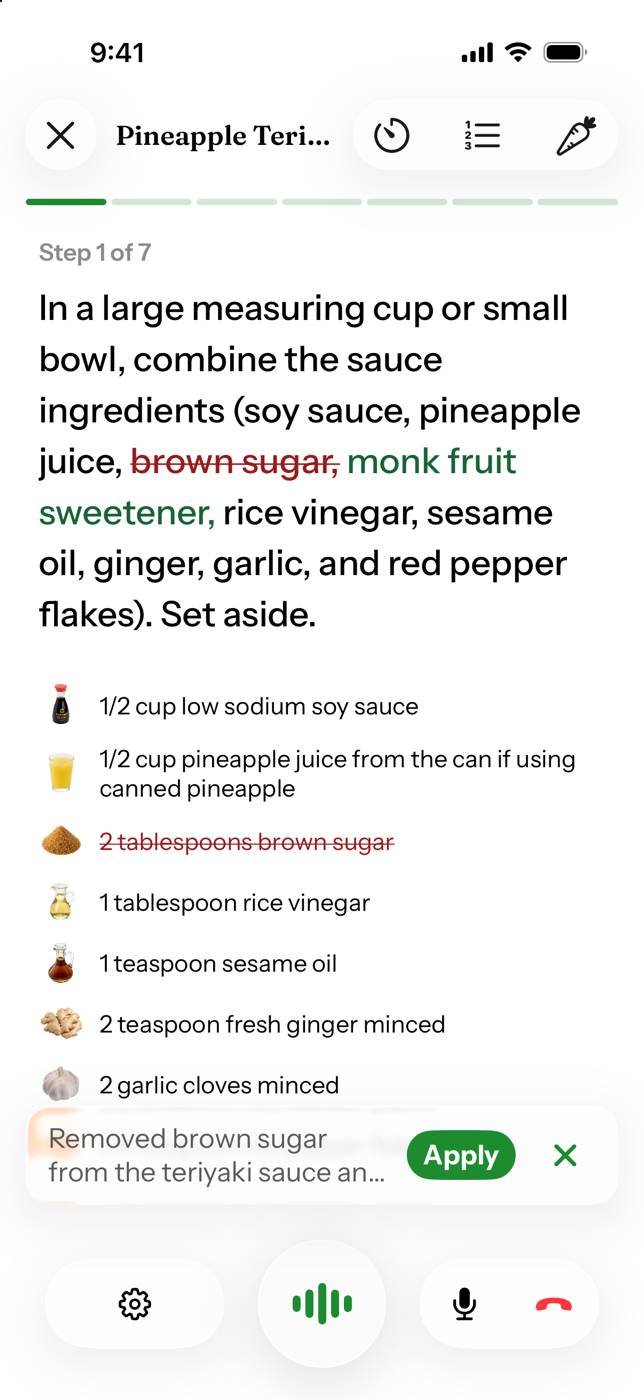
  2. Cado shows the proposed swap inline, brown sugar struck out and monk fruit sweetener added, with Apply and dismiss buttons

    02The change, proposed

    The assistant edits the recipe as a proposal: see the diff in place, then Apply or dismiss.

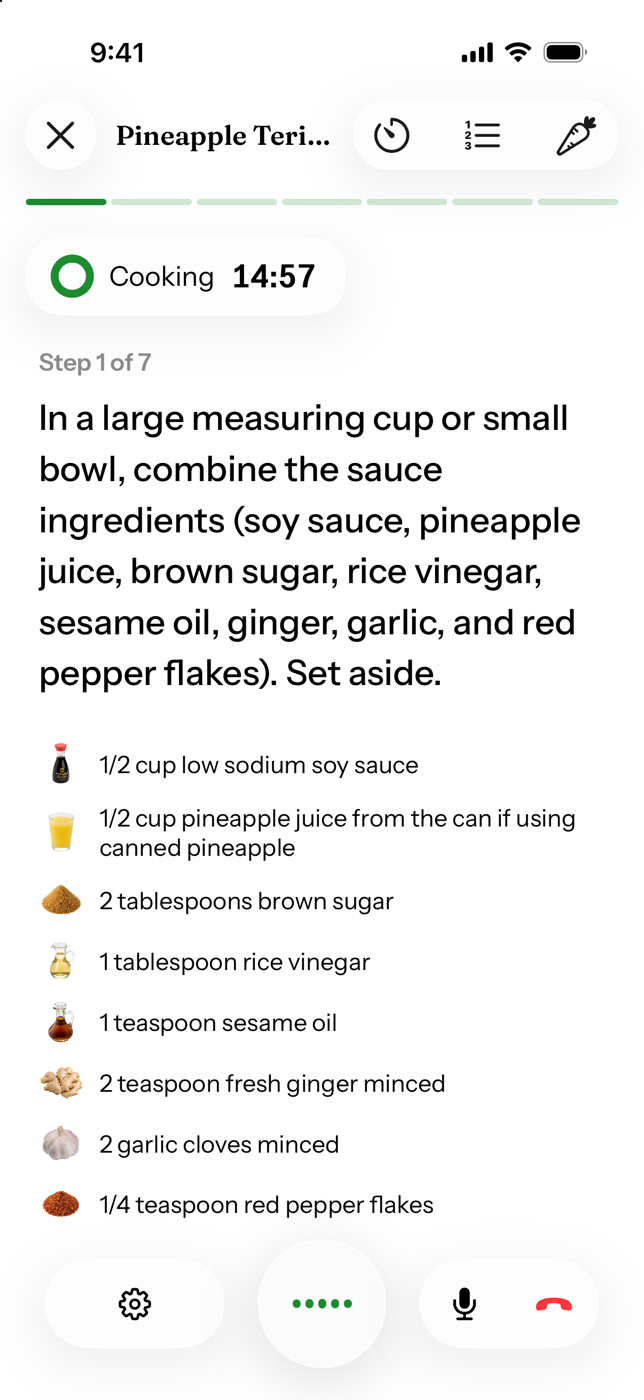
  3. Cado cook mode with a voice-set 15-minute timer running above the current step

    03Setting timers

    Say it, and a named timer starts on screen while you keep cooking. No hands needed.

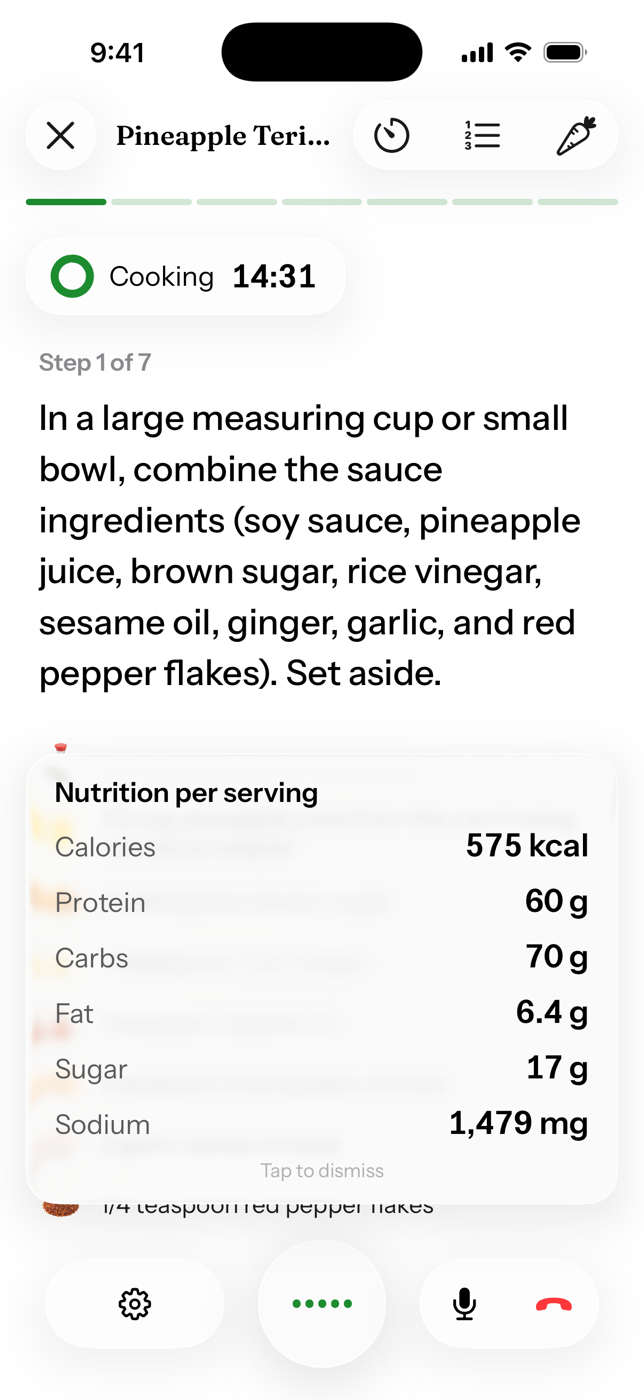
  4. Cado cook mode showing a per-serving nutrition card over the recipe

    04Showing nutrition

    Ask what's in it mid-cook and the recipe's real numbers appear on screen, not a guess.

Why we built it ourselves

  • Off-the-shelf voice products didn't fit the cost or the control we needed
  • Owning the system means we decide what the assistant knows, says, and can do

Built for a real kitchen

  • Tuned to tell a pause mid-sentence from the end of a thought
  • You can interrupt it, but an 'uh-huh' won't cut it off
  • Designed for noise, interruptions, and non-linear cooking

Context awareness

  • Knows the recipe, the step on screen, and what you've already talked about
  • Knows the diets, allergies, and goals in your profile
  • 'Is it ready?' means this step. No one pastes the recipe into a prompt

Hands-free tool calls

  • Speech turns into real tool calls inside the app, no taps needed
  • Moves between steps, shows ingredients, and runs timers
  • Recipe changes are proposed first and can be undone
  • Adds to groceries or the meal plan, and only logs a meal as cooked after you say so

Food safety

  • Answers come from food-safety guidance from USDA, FDA, and CDC
  • Doneness comes from a thermometer, never from how food looks
  • If it doesn't know, it doesn't guess a number

Voice vs chat

  • Same assistant and abilities, two ways to talk to it
  • Voice while cooking. Chat for planning, browsing, and reviewing
  • Separate instructions for each, because writing for the ear isn't writing for the screen
03Cado·AI Systems · Tool Calling · Context
Cado logo

From answering to acting

Cado's chat assistant can act across the app (recipes, groceries, the meal plan, cookbooks) and knows who it's cooking for. Every action shows up in the app as something you can undo, apply, or confirm.

Problem
An assistant that can only talk leaves the work to the user: find the screen, tap through, update it by hand.
Build
Tool calls connected to real app features, plus user context the assistant uses on every message.
Principle
The AI should act, but consent scales with risk: undo for small changes, one tap for proposals, a deliberate confirm for anything destructive.
Fig. 03 / User → AI → Tool → Product state
01 · User

“Find me high-protein, anti-inflammatory recipes.”

02 · AI

Intent

Search, then show results

03 · Tool

present_recipes()

{ recipes: [ … ] }

04 · State

Chat

text only

recipe cards: open · save

Conversation

The model explains or suggests. Nothing in the app changes.

Action

The model calls a tool. Product state changes and the UI reflects it.

Real tool names · example requests

In the app

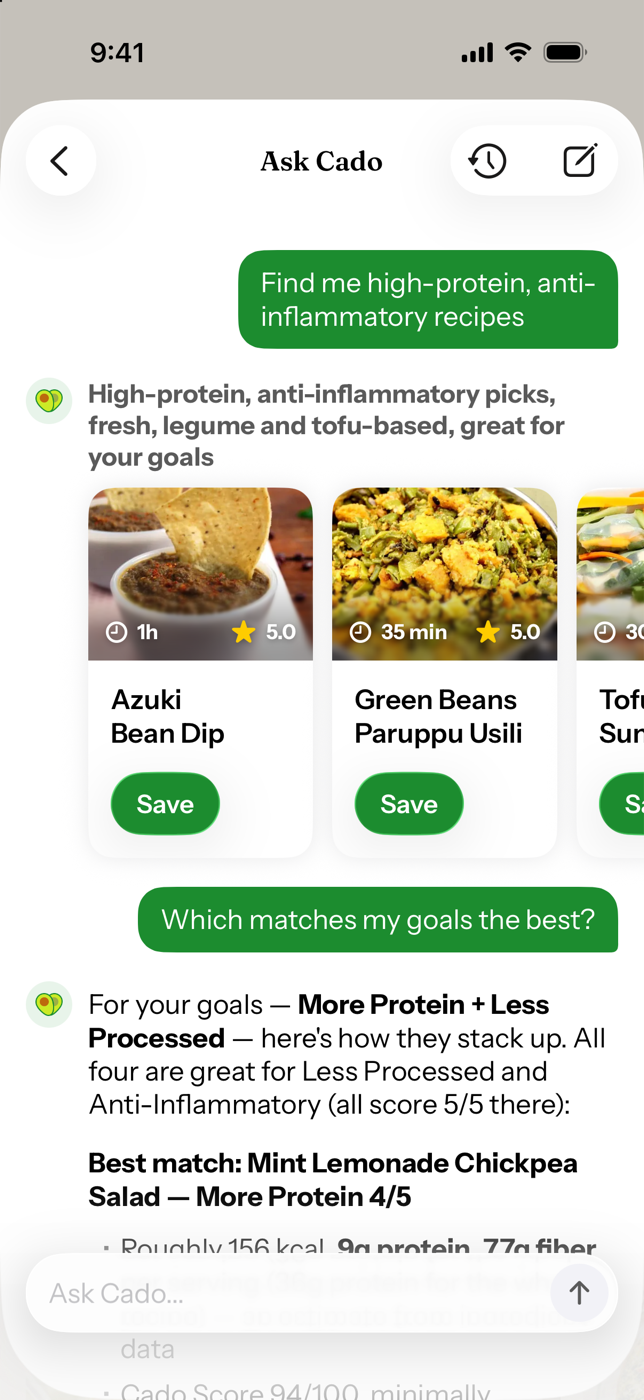
  1. Cado chat returning high-protein, anti-inflammatory recipe cards, then ranking them against the user's goals

    01Finding recipes

    Real recipe cards, not a list of links. Ask which fits best and it ranks them against your goals, unprompted.

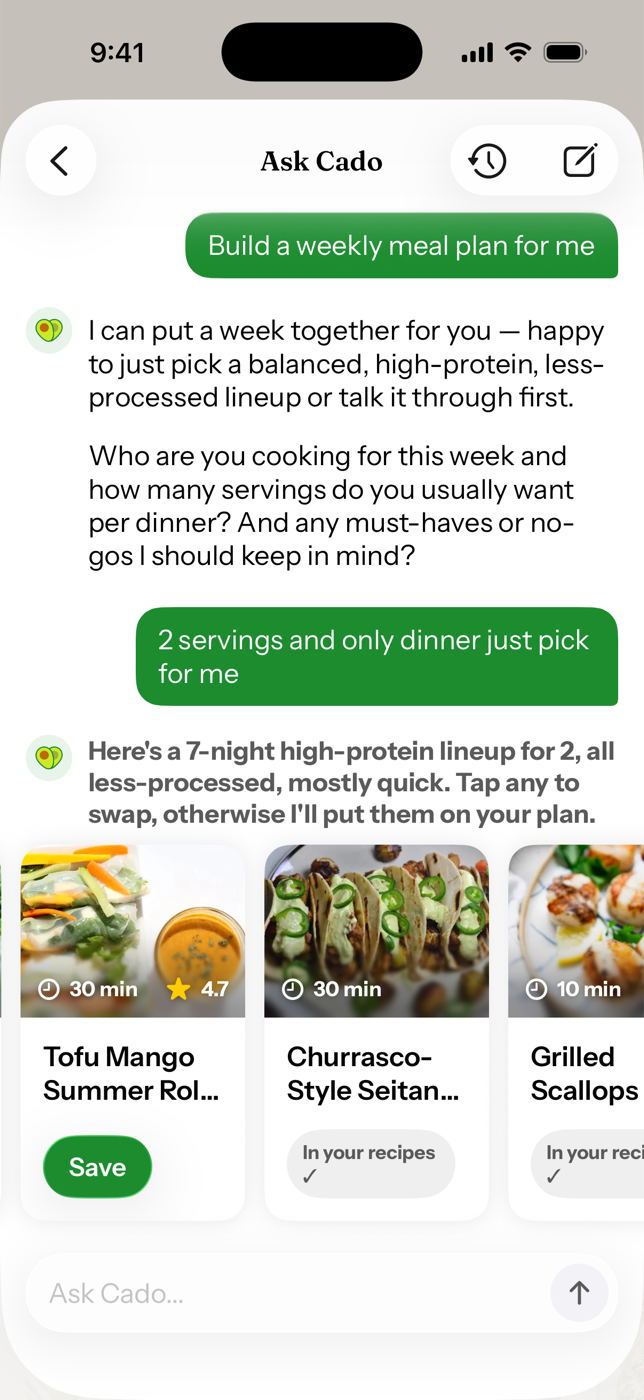
  2. Cado chat asking one clarifying question, then proposing a 7-night dinner lineup for two

    02Planning the week

    One clarifying question, then a 7-night lineup built around your goals, ready to go on your plan.

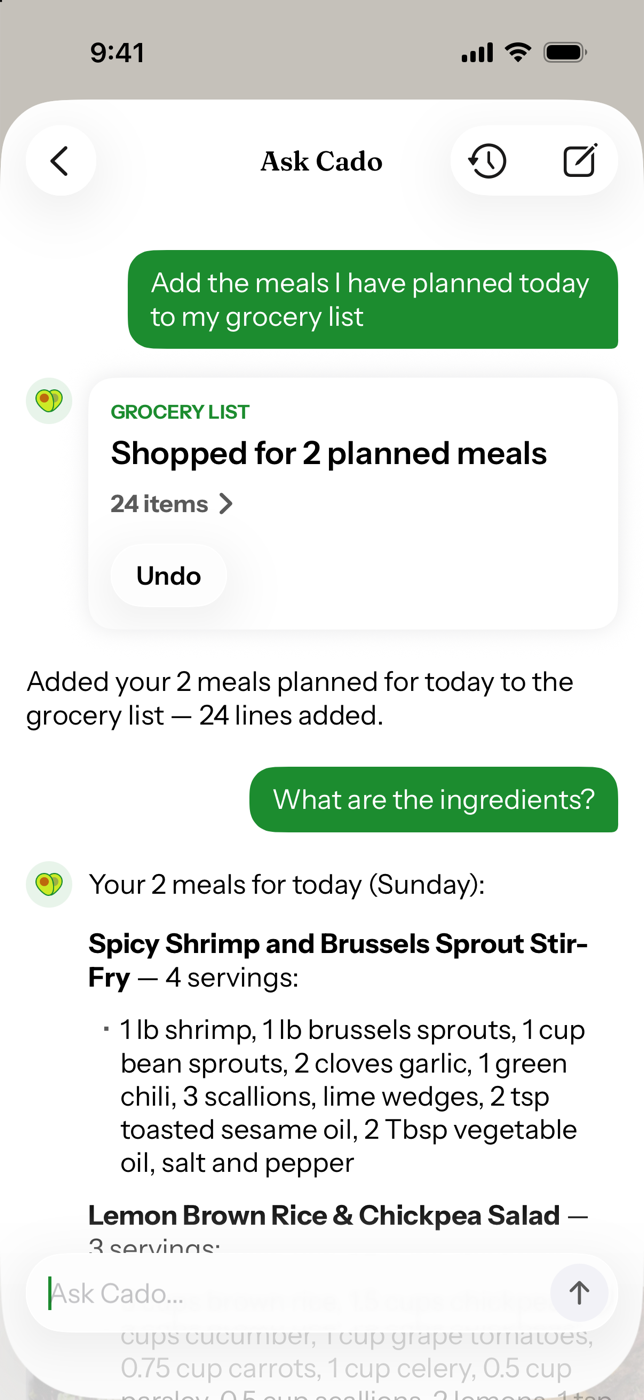
  3. Cado chat adding today's planned meals to the grocery list, with an Undo button

    03Shopping the plan

    Reads the plan, writes the grocery list: 24 items added, with an Undo right there.

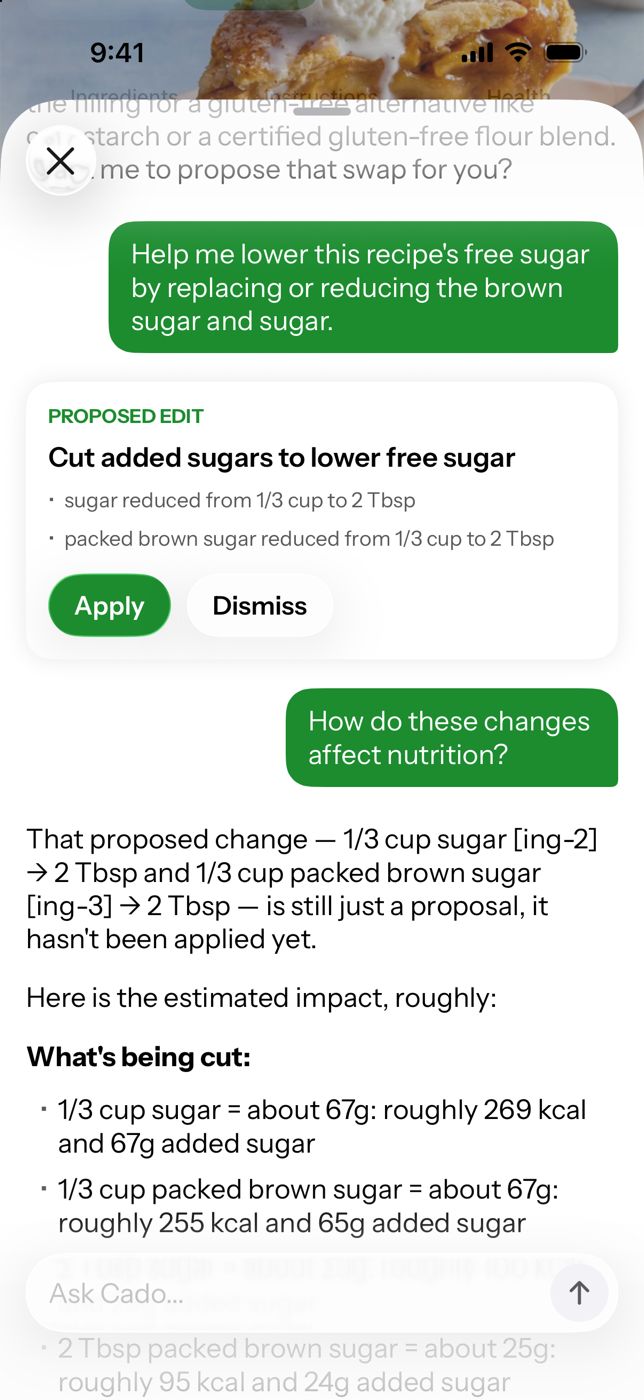
  4. Cado chat proposing an edit that cuts the recipe's added sugars, with Apply and Dismiss

    04Editing a recipe

    Changes arrive as a proposal to apply or dismiss, and it can explain the nutrition impact first.

Tools as product

  • Each tool maps to one real app capability: search, edit, plan, shop, save
  • Tools are scoped narrowly so a request maps cleanly to one action
  • Results render in the app as cards, not just as text in the chat

Using user context

  • Every message knows the user's diets, allergies, tastes, health goals, and household
  • Context is used quietly, never recited back
  • Allergies are always present and always flagged, never left to chance

Behavior when it matters

  • What's planned, cooked, bought, and saved is looked up when relevant, which keeps each turn lean
  • The assistant remembers what you did with its suggestions and what changed in the app between messages
  • Recipe search steers around declared allergens

Consent scales with risk

  • Small changes apply right away, with an undo
  • Bigger changes, like recipe edits, arrive as a proposal to accept
  • Anything destructive needs a deliberate confirmation

Reliability

  • It never says something is done until the app confirms it
  • Every change reports what happened and what didn't
  • Tested against tricky requests and real conversations before changes ship
04Beam·Growth Systems · Automation
Beam logo

Rebuilding Clay in n8n: a GTM engine at a tenth of the cost

At Beam, I reverse-engineered much of Clay's functionality with n8n and other infrastructure, and turned outbound into an internal product.

Problem
The real bottleneck was the data source: finding enough of the right companies, with enough information to reach them well. Off-the-shelf tools were expensive at that volume.
Build
An n8n pipeline: source companies with Firecrawl, scrape and enrich with Apify and other APIs, clean, add social data, LLM-qualify, personalize, then run outbound from a Supabase-backed CRM.
Principle
The interesting part isn't outbound. It's treating distribution as a system you design, measure, and iterate.
~90%
Lower sales infra cost
1,000+
Qualified B2B leads / day
30,000+
Qualified leads sourced
+34%
Cold outreach response rate
Fig. 04 / Pipeline architecture, orchestrated in n8n
  1. 01Data sourcing

    Firecrawl scrapes sites for company names

    Data
  2. 02Scrape & enrich

    Apify + APIs: founders, LinkedIn, website

    Data
  3. 03Clean

    Merge and fill every field we can

    Data
  4. 04Social data

    Founder and company profiles

    Data
  5. 05LLM qualification

    Does this company fit?

    LLM
  6. 06Personalization

    Message written per lead

    LLM
  7. 07Store & track

    Supabase as the CRM: status per lead

    Action
  8. 08Outbound

    Automated sequences

    Action

Orchestration

n8n

Replaced much of what we'd otherwise pay Clay for.

Throughput

1,000+

qualified B2B leads / day

Cost

~90%

lower sales infrastructure spend

Data first

  • Firecrawl scrapes target sites to build the list of company names
  • Each company is scraped and enriched with Apify and other APIs: founders, company LinkedIn, website
  • The data is cleaned and merged so every lead carries as much as we can find, plus its social data

What it demonstrates

  • Finding the real bottleneck: the data, not the sending
  • Designing an automated system around it
  • Integrating APIs and tools into one workflow

LLMs inside the workflow

  • Qualification: the model decides whether a lead fits
  • Personalization: the model writes from each lead's actual data
  • LLMs as steps in a pipeline, not a chat window

Measure → iterate

  • Every lead lives in Supabase, which tracks its status like a CRM, from sourced to replied
  • Response rate improved 34% on cold outreach
  • Built as an internal product for distribution, not a one-off script
05Slidez·Zero-to-One · Physical Product
Slidez logo

Slidez: recovery footwear, built in high school

An athletic recovery footwear brand and sports media company. Customer interviews, prototypes, international manufacturing, sales, and distribution, years before Cado.

Problem
Across 150+ interviews, athletes kept asking for the same thing: recovery. Footwear for between sessions that actually helps you recover.
Build
150+ customer interviews, five prototypes with a former Nike designer, international manufacturing, then sales.
Principle
Distribution is part of the product. Athlete partnerships and our own media drove 12.5M+ organic views.
$5K+
In sales
12.5M+
Organic views in 3 months
20+
NCAA D1 athletes signed
150+
Customer interviews
5
Physical prototypes
Fig. 05 / From mockup to the field
  1. 01

    Interviews

    150+

  2. 02

    Recovery thesis


  3. 03

    Design

    ex-Nike designer

  4. 04

    Prototypes

    5

  5. 05

    Manufacturing

    International

  6. 06

    Sales


  7. 07

    Athletes

    20+ NCAA D1

  8. 08

    Media

    12.5M+ views

Customer → productMake → sellDistribution

Product lifecycle

  1. 01Mockup

    Early digital mockup of Slidez with a script logo strap
    Concept
  2. 02First sample

    First physical Slidez sample with the cloud artwork test-fit on the strap
    Testing the design
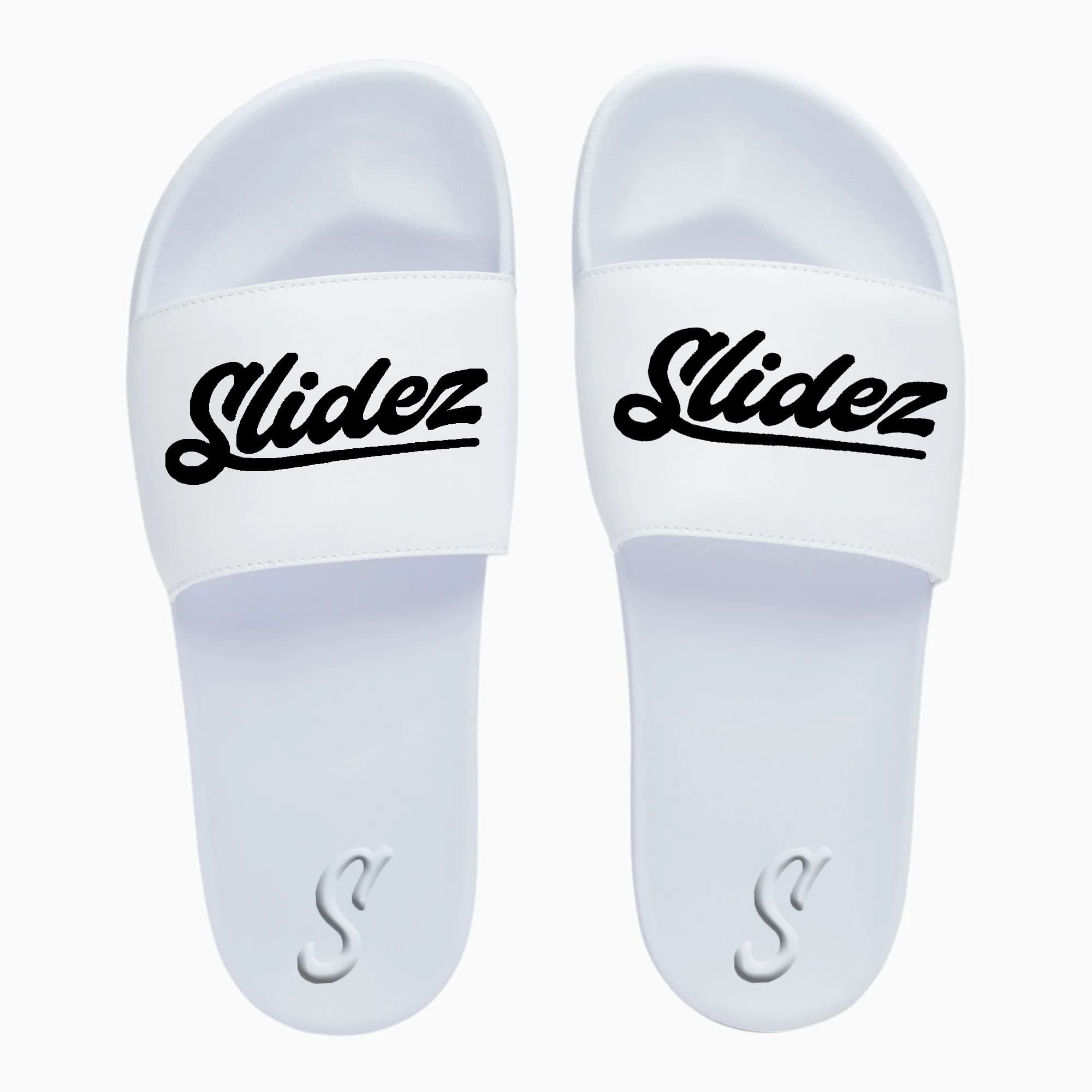
  3. 03Production

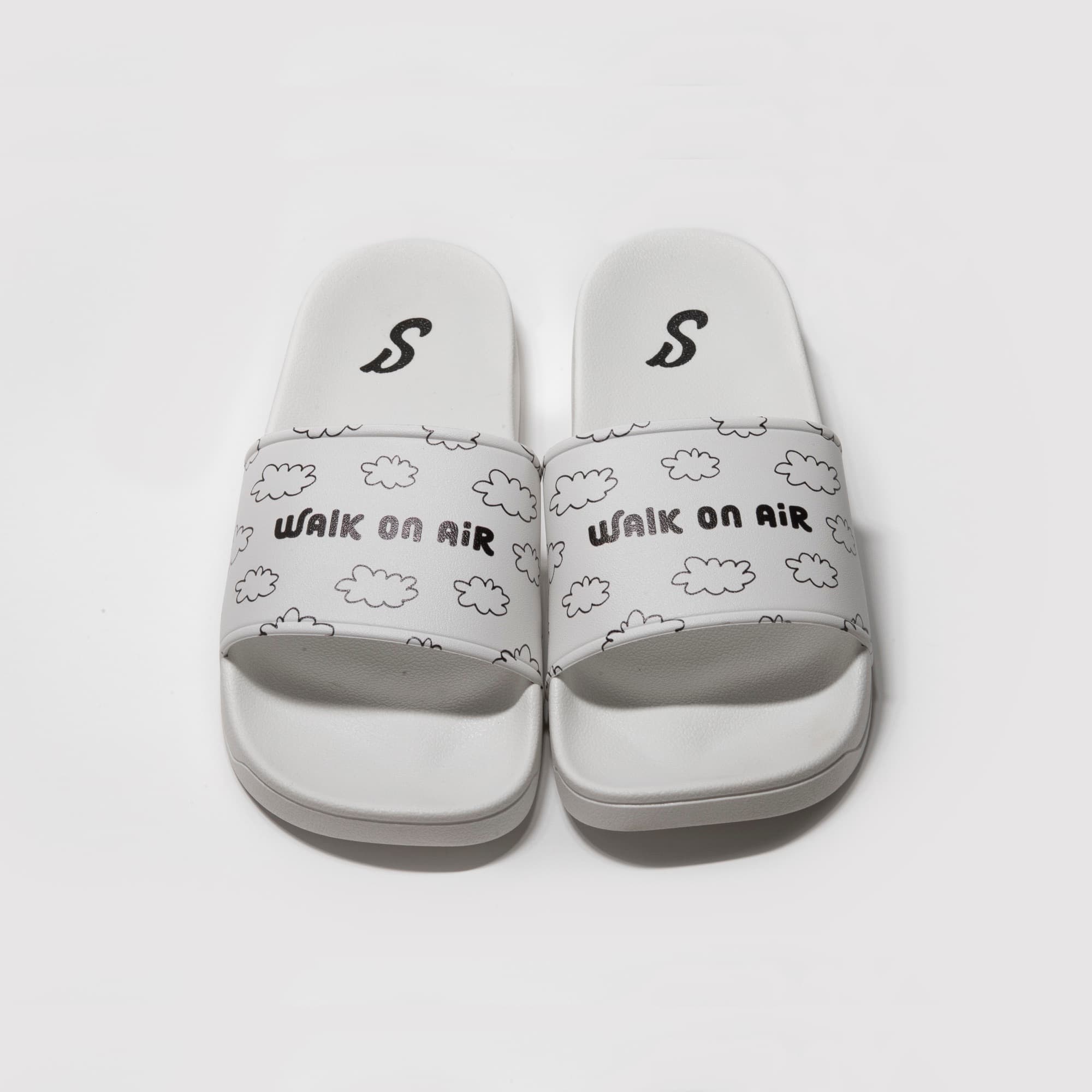
    Final production Slidez 'Walk on Air' slides
    Final product

In the field

Athlete putting on Slidez in a baseball dugout
Dugout
Athlete holding up a pair of Slidez
Athlete
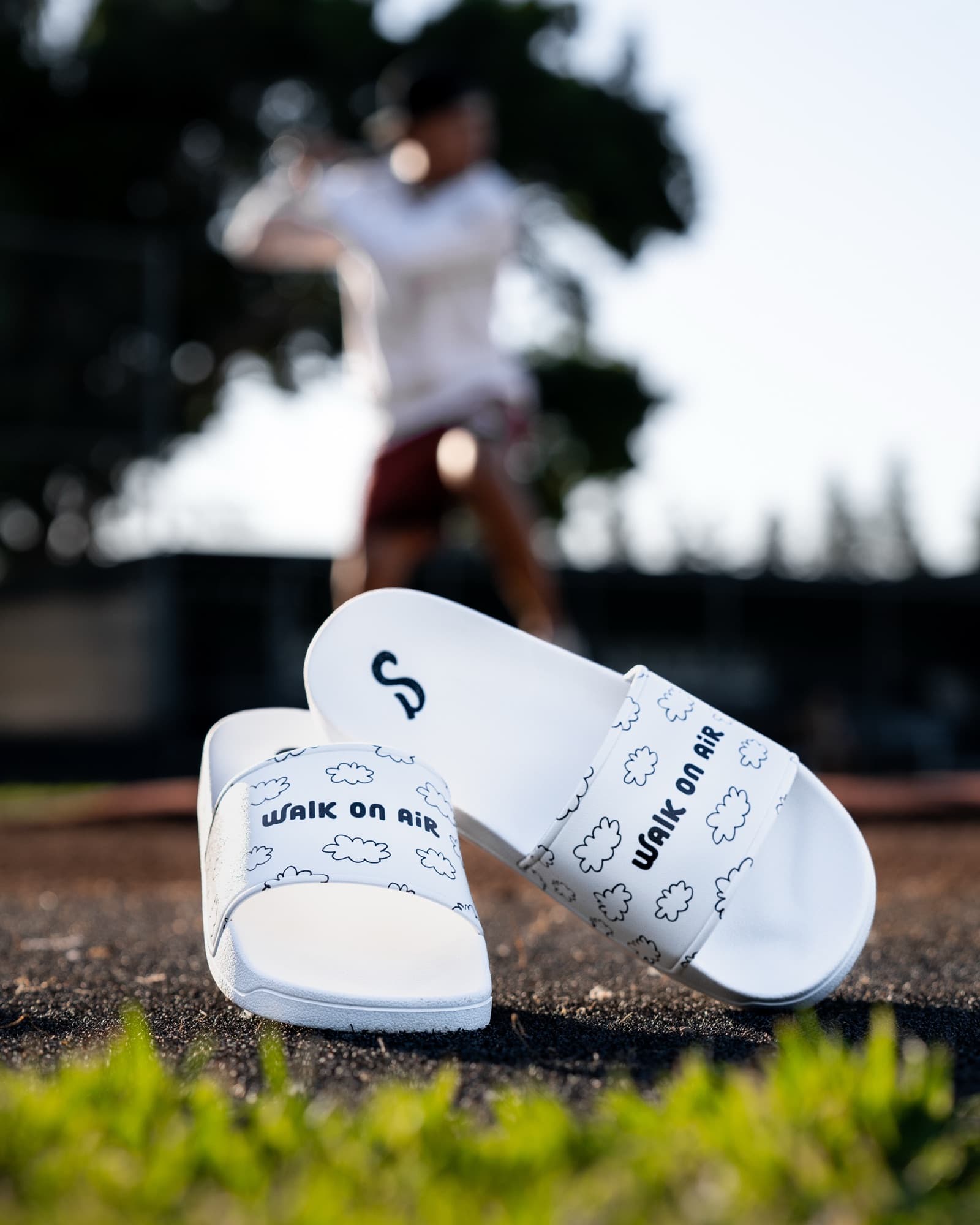
Slidez on the field with an athlete swinging in the background
On the field
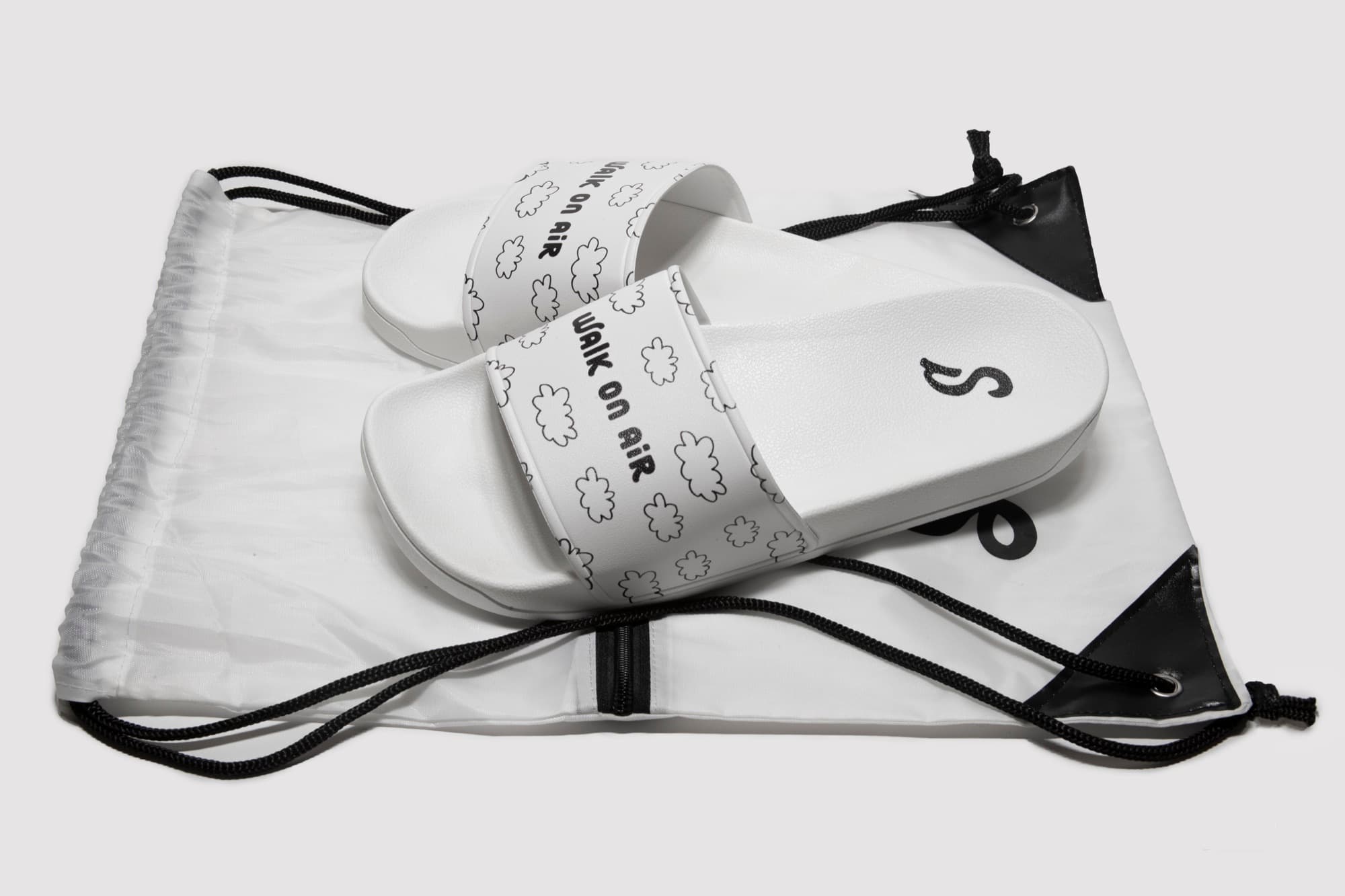
Final Slidez slides on the branded drawstring bag
Packaging
Slidez 'Walk on Air' launch graphic
Launch creative

Customer → product

  • 150+ customer interviews shaped the recovery thesis
  • Designed with a former Nike designer
  • Five physical prototypes before production

Make → sell

  • International manufacturing
  • Direct sales of the finished product
  • Started in high school

Distribution

  • 20+ NCAA Division I athletes signed for campaigns
  • Sports media company alongside the brand
  • 12.5M+ organic views in three months

Trajectory

Four chapters, converging.

Performance, then health, then growth and AI systems. Cado is where they meet.
01
Slidez

Slidez

Performance

02
Zoe BiosciencesSensate

Zoe Biosciences / Sensate

Health · Wellness · Longevity

03
Beam

Beam

Growth + AI Systems

04
Cado

Cado

Consumer Health + AI + Product

Health & performance

Slidez: yes
Zoe Biosciences / Sensate: yes
Beam: no
Cado: yes

Customers & product

Slidez: yes
Zoe Biosciences / Sensate: yes
Beam: yes
Cado: yes

Growth & distribution

Slidez: yes
Zoe Biosciences / Sensate: yes
Beam: yes
Cado: yes

AI systems

Slidez: no
Zoe Biosciences / Sensate: no
Beam: yes
Cado: yes

Filled = a core part of that chapter. All four strands meet at Cado.

About

Training, recovery, and performance are part of how I live. They were long before they were part of a product.

  • Build01

    Shipping since high school

    • Slidez
    • Beam GTM system
    • Cado
  • Train02

    Endurance and the mat

    • Marathon runner
    • Jiu-jitsu
    • Running outdoors
  • Learn03

    How humans perform

    • Fitness & recovery
    • Longevity
    • Sports & human performance
  • Create04

    Outside the product

    • Music production
    • Outdoors